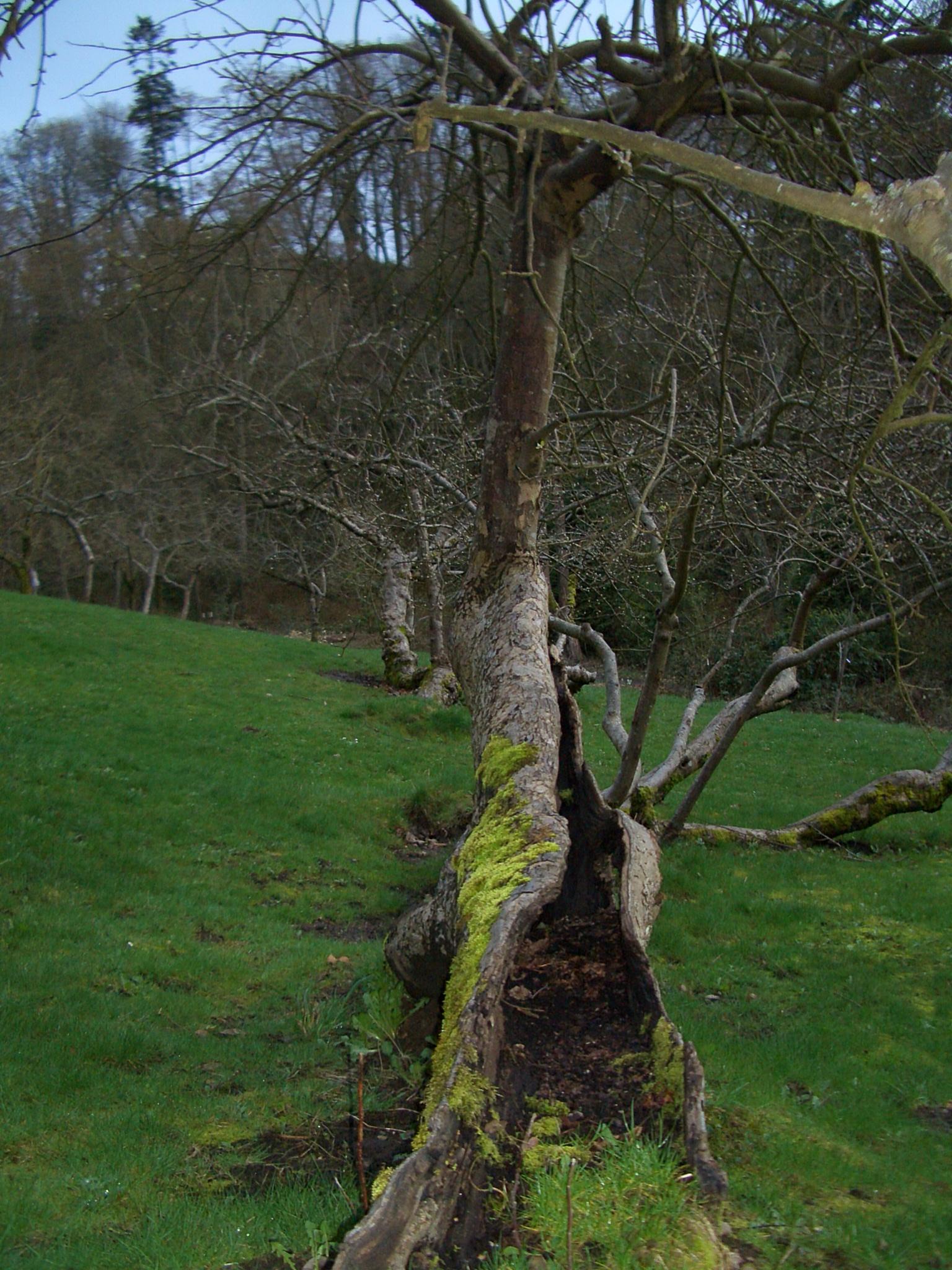
An old apple tree in Maine kept the genetic evidence of a journey across the Atlantic—long after the people who made it were forgotten.
At the edge of an old orchard on Verona Island, Maine, a weathered apple tree held a secret. Its trunk was partly hollow, its branches twisted, and no one nearby knew its original name. Yet the tree was still alive, and its leaves contained a clue to a journey across the Atlantic.
A tree without a name
Apple historian John Bunker and fellow researchers have spent years tracking down Maine’s forgotten apple varieties. Old orchards are living archives, but the labels that once accompanied their trees are often gone. A tree can keep growing long after the people who planted it have disappeared.
The Verona Island specimen looked old and fragile. Its identity could not be settled simply by examining the fruit or its bark. Researchers needed a different kind of evidence.
A genetic match across the ocean
Geneticist Cameron Peace and collaborators compared the tree’s DNA with records of cultivated apple varieties. The result connected the Maine tree to Drap d’Or de Bretagne, a historic French apple described in records dating to 1628.
This was more than a resemblance. Cultivated apples are commonly preserved by grafting, because a seed from a named apple does not reliably produce the same variety. A genetic match suggests that someone had deliberately propagated this cultivar.
The discovery linked a living tree in rural Maine to an old European horticultural tradition. But it did not reveal exactly who brought the variety to North America, or when.
The journey we cannot reconstruct
The Atlantic crossing remains a mystery. Researchers have considered the area’s historic French connections, but there is no documented voyage or named gardener that explains how the cultivar arrived.
That gap is fascinating. A tree can preserve evidence of human choices without recording the names of the people who made them. Someone, somewhere, thought this apple was worth carrying and keeping alive.
More than one surviving tree
Subsequent genetic comparisons identified other nearby trees of the same variety. Grafts have also been taken to preserve it in living collections, including Maine’s heritage orchards.
This is conservation by continuation: keeping a cultivar alive so its fruit can still be grown, studied and tasted. The old tree’s value is not merely in how long it has stood. It has helped recover a piece of agricultural history.
What old trees remember
A hollow trunk may look like decay. In this orchard, it was also a doorway into a forgotten story of travel, taste and human attachment to particular plants.
How many journeys survive only because someone once planted a tree?
Trees I Saw is an observation project about trees, places and the stories that gather around them — treesisaw.com.
Sources
- Scientific American: “How apple detectives solved the mystery of an ancient tree—and rewrote the history of fruit”
- Connecticut Public: “On Verona Island, historians discover one of the oldest living apple trees in North America”
- Maine Organic Farmers and Gardeners: Drap d’Or de Bretagne
Representative image (not the Verona Island tree): Vladimir Menkov, Wikimedia Commons, CC BY-SA 3.0.