Trees do not usually move.
Their stories are tied to the exact patch of soil in which they began: a roadside, a garden, an orchard, a forest, a village square.
That permanence is part of what makes old trees extraordinary. People arrive and leave. Buildings change. Roads move.
The tree stays.
But in Mendoza, Argentina, thousands of old olive trees are living a different kind of story.
They have been given a second address.
When an orchard disappears
Mendoza is best known internationally for wine, but olive growing is also woven deeply into the region’s agricultural history.
Many of its old groves were planted and tended by generations of immigrant families, including Italians and Spaniards who helped shape the agricultural landscape of western Argentina. Some of those olives have now been growing for more than a century.
But landscapes change.
Agricultural land becomes housing. Old plantations are replaced by other crops. Trees that once formed part of a working landscape become obstacles to whatever comes next.
And an old olive tree is difficult to move.
The simplest solution is often to cut it down. In Mendoza, some threatened trees were destined for firewood or brick kilns.
Emilio Cicero decided on a considerably more complicated solution.
He would move them.
It began with 3,000 trees
In 2015, Cicero acquired a property in Maipú for his agricultural business. He planned to grow almonds there.
Around 3,000 old olive trees stood across 30 hectares of the land.
They were in the way.
Instead of cutting them down, Cicero used heavy equipment to transplant the olives into three hectares of the property. He arranged them not in the straight lines of a conventional orchard but in large circles, leaving each tree enough room and light to continue growing.
What began as an unusual solution to a practical problem slowly became something else.
People heard that Cicero was saving old olive trees. Then they began calling him.
There were more trees elsewhere in Mendoza that needed somewhere to go.
Five thousand second chances
Over the following decade, Cicero and his family continued moving trees threatened by development, agricultural change and removal.
The original circular plantings grew into the Reserva de Olivos Centenarios Parque Los Inmigrantes. Cicero told local newspaper MDZ that the main sanctuary now holds an estimated 4,000 to 5,000 rescued olives. Together with newer reserves nearby, the family’s work has already relocated more than 5,000 trees.
Many are more than 100 years old. A group rescued in 2023 may be considerably older: specialists have suggested ages of 300 years or more, but the trees have not yet been formally dated. Cicero is working with a university team to establish their age more precisely.
Moving something that old is not remotely comparable to planting a sapling.
Specialist machinery has to extract a tree while preserving enough of its root system for it to survive. The trunk and branches then have to travel—sometimes many kilometres—before the tree can be planted again.
Olive Oil Times describes one move in which an olive travelled about 16 kilometres on a front loader, just above ground level, with people walking beside it to support its branches. Another particularly difficult specimen required three cranes.
Imagine watching that procession pass.
A tree that had spent perhaps a century in exactly the same place was suddenly travelling down a road.
Not an orchard anymore
The result is visually unusual.
Instead of agricultural rows, the rescued olives form large circles. Paths, water and memorial elements now run between them. What began as three concentrated hectares has expanded into a sanctuary covering almost 14 hectares.
Its name matters too.
Parque Los Inmigrantes—the Immigrants’ Park.
The sanctuary is partly a tribute to the immigrant families who helped establish Mendoza’s agricultural culture. Some areas preserve trees associated with particular families and the names of people who worked the land before.
There is something particularly fitting about using transplanted trees to tell a story about migration.
These olive trees have roots.
But their roots are no longer where they began.
Can you move a tree’s history?
Part of the meaning of an old tree normally comes from its location.
A tree beside an old house may have known every family that lived there. A village tree may have watched generations cross the same square. An orchard may preserve the structure of a landscape that has otherwise vanished.
Move the tree, and that relationship is interrupted.
But cutting it down ends the story altogether.
The trees at Parque Los Inmigrantes now contain both places.
There is the landscape where each one spent its first hundred—or perhaps three hundred—years.
And there is the sanctuary where it continues growing.
The trunk came with it.
The rings came with it.
The scars came with it.
The old branches came with it.
Only the coordinates changed.
A tree can have another chapter
We often talk about preserving old trees as though preservation always means keeping everything exactly as it is.
Sometimes it does. An ancient tree standing in its original landscape is almost impossible to replace, and moving mature trees should never become an excuse for unnecessary destruction elsewhere.
But the Mendoza sanctuary tells a different kind of conservation story.
These particular trees were going to disappear.
Instead, people decided that being inconvenient did not have to mean being disposable.
So thousands of them were dug from the landscapes they knew and planted somewhere new.
Today they are growing again. Some are producing olives, although the sanctuary was not created as a commercial orchard. The family is considering making a small amount of oil from their fruit.
For now, Parque Los Inmigrantes remains private, with plans to open it gradually to the public. A place created simply to keep trees alive may eventually become somewhere people visit specifically to see them.
Trees usually spend their entire lives in one place.
These ones got another.
Sources: Olive Oil Times and MDZ.
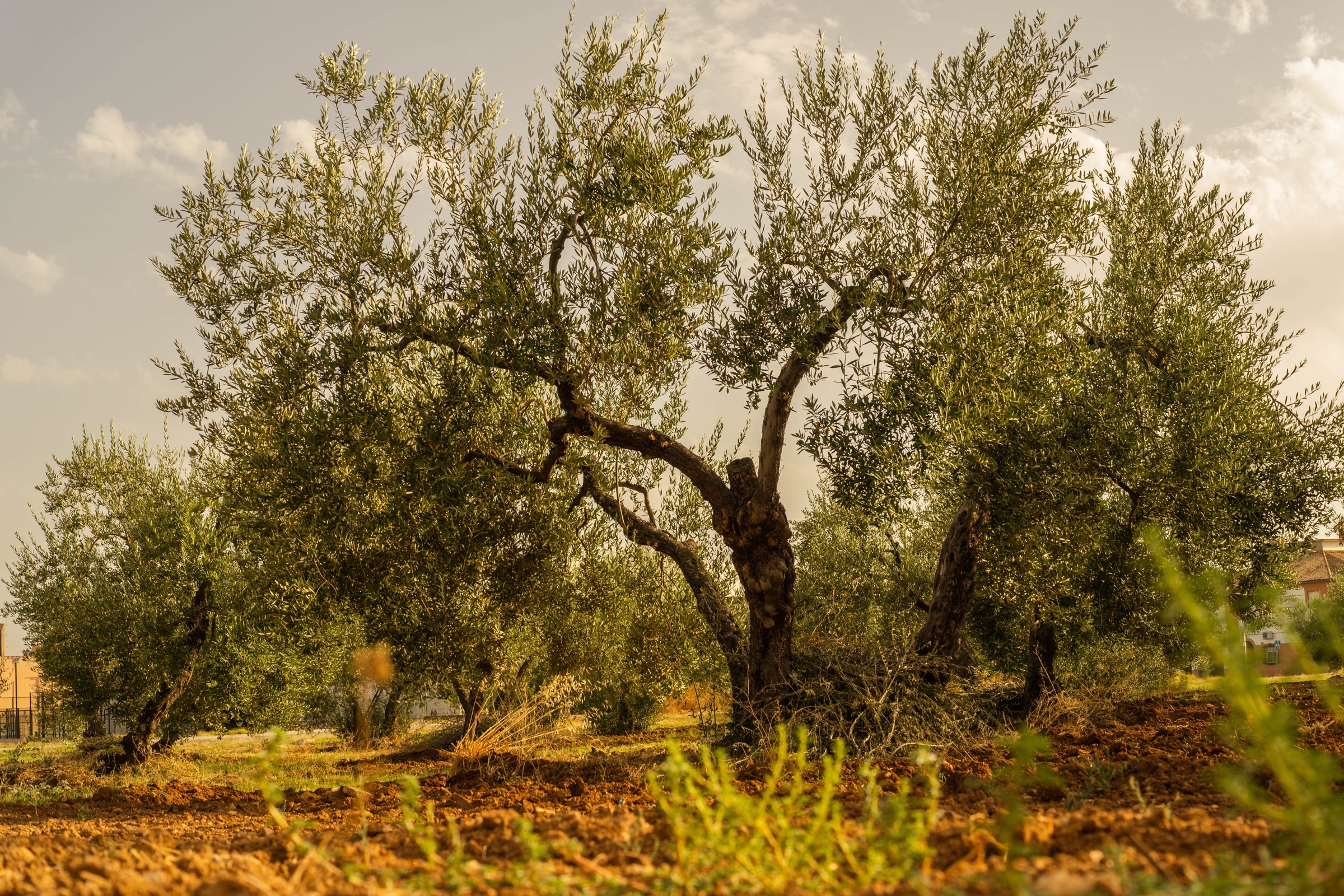
Image: Representative photograph by Wirestock on Freepik. Licensed through Freepik. The photograph was not taken at Parque Los Inmigrantes.
Trees I Saw
Every tree has a place. Some have more than one.